
 Skip to main content
The United States and India want democracy in Bangladesh as quickly as possible: Ambassador Eric Garcetti
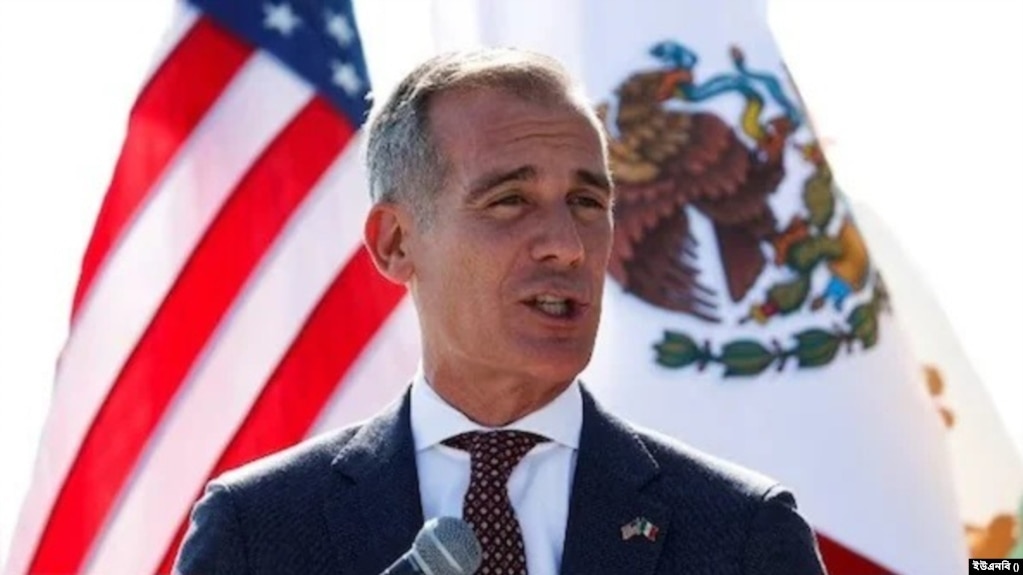 |
| Eric Garcetti |
Both the United States and India wish to see democracy and democratic elections in Bangladesh as soon as possible, stated U.S. Ambassador to India, Eric Garcetti.
He made this comment during an interview with Indian media outlet WION. Eric Garcetti said, “Democracy can open a new chapter for Bangladesh. This is not about the past; we must think about what we can achieve together.”
This marks the first time the U.S. Ambassador to India has commented on Bangladesh’s elections.
Eric Garcetti said, “Both our countries aspire to see a peaceful and democratic South Asia. India and the United States agree on this policy. We share this commitment.”
He further remarked that the two countries are coordinating in this regard. Ambassador Eric Garcetti said, “We want to make it clear that no country, including Bangladesh, should tolerate the persecution of religious minorities. We believe there is an opportunity for us.”
Responding to a question from VOA Bangla on December 3 about how the U.S. views allegations of alleged "inaction" by Bangladesh’s interim government in ensuring the safety of minorities, a spokesperson for the U.S. State Department stated in an email that the U.S. welcomes the continued measures taken by Bangladesh’s interim government to ensure the safety of all its citizens.
The spokesperson said, “We condemn any violence against minority communities and any incidents of intolerance directed at them. We welcome the interim government’s ongoing efforts to ensure the safety of all Bangladeshi citizens.”
When asked about the U.S. position on incidents of persecution of minorities in Bangladesh, the State Department conveyed in the email to VOA Bangla that the U.S. supports freedom of religion or belief, freedom of expression, and the right to peaceful assembly and association as fundamental freedoms. The U.S. regularly communicates this support to its partners, including Bangladesh’s interim government.
During a regular briefing at the U.S. State Department on December 3, Deputy Spokesperson Vedant Patel, responding to a question about incidents of minority persecution in Bangladesh, said, “Our stance is consistent with all countries we engage with—emphasizing the importance of respecting fundamental freedoms, religious liberties, and basic human rights.”

Vedant Patel further stated, “Any form of protest must be peaceful. In cases of arrests or detentions, governments must respect the rule of law and uphold fundamental human rights. The United States will continue to emphasize these principles to all nations.”
Meanwhile, during the U.S. presidential campaign, Donald Trump, in a post on X (formerly Twitter) and Truth Social on October 31, wrote, “I strongly condemn the brutal violence against Hindus, Christians, and other minorities who are being attacked and looted by mobs in Bangladesh. The country is in utter chaos.”
In his post, Trump criticized the Biden-Harris administration for failing to protect Hindus.
On September 26, U.S. Secretary of State Antony Blinken met with Bangladesh’s interim government chief adviser, Dr. Muhammad Yunus, during a break at the United Nations General Assembly.
Following the meeting, State Department spokesperson Matthew Miller said the two leaders discussed the importance of press freedom, combating corruption, respecting labor rights, and protecting human rights for all, including Rohingya refugees and members of minority communities in Bangladesh.
On September 20, the U.S. Senate Foreign Relations Committee sent a letter to interim government chief adviser Dr. Muhammad Yunus. In the letter, lawmakers called for swift action and strict enforcement of the law to hold accountable those responsible for attacks on the Hindu community and vulnerable groups, including Rohingya refugees in Cox’s Bazar.
In their letter, the senators noted that achieving historical change in Bangladesh has come at a significant cost. They expressed concern over widespread violence during a time meant for celebration, where police, minority Hindus, and individuals perceived as supporters of Sheikh Hasina’s government were targeted.
The interim government of Bangladesh has stated that reports of violence and attacks on minorities are exaggerated.
Comments
Post a Comment